
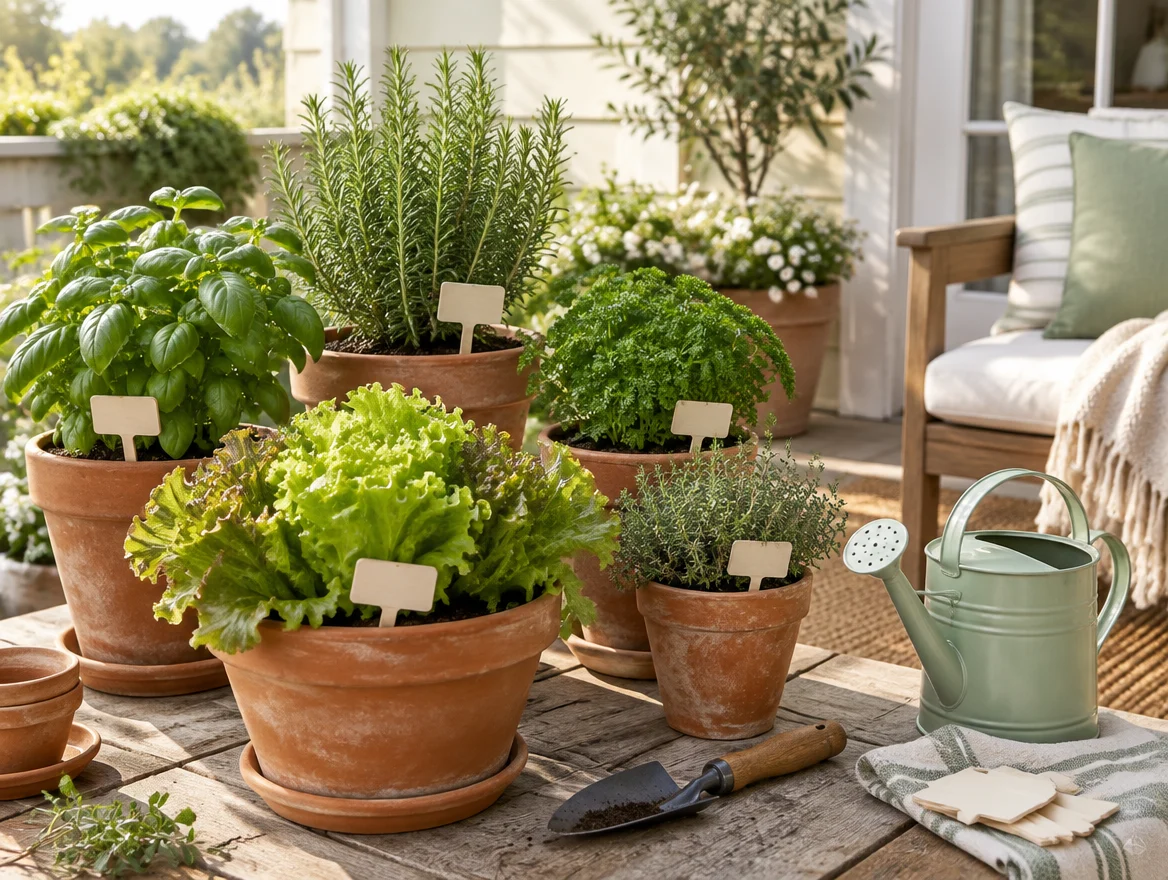
A good first garden is one you can visit often. You do not need a row of raised beds to begin. One suitable container, one plant, and a habit of checking it can teach you more than a complicated setup you cannot maintain.
1. Watch the light before buying plants Look at your chosen spot in the morning, around midday, and in the afternoon. Record actual direct sunlight, not how bright the room or patio feels. Most vegetables need at least six hours of direct sun. Nearby trees, walls, and the season can change the pattern.
2. Make water convenient Choose somewhere close to a water source, with good drainage and a safe path. A heavy watering can carried across the house gets old surprisingly quickly. Do not put containers where drainage will damage a floor or create a slippery walkway.
3. Choose one kind of success For a first attempt, try a leafy herb transplant, a container of season-appropriate lettuce, or radishes planted from seed in the right weather. Choose something your household will actually use. Ask a local Extension office or nursery which varieties suit your climate.
4. Set up the container properly Use a stable food-growing container with drainage holes and fresh potting mix intended for containers. Do not scoop unknown soil from a roadside or use a container that held chemicals. Read the plant label for mature size and spacing.
5. Keep a tiny garden notebook Write the plant name, planting date, light conditions, and what you notice each week. Before watering, check the mix rather than following an inflexible daily schedule. Take a picture when the plant changes. Observe before adding fertilizer or treatments.
6. Make it a family ritual Children can label pots, draw leaves, and record growth while an adult handles tools and any fertilizers. Wash hands after gardening. Keep pets out of potting materials, compost, and products that may be harmful if eaten.
Grandma: We are starting with one pot.
Bruisey: I have already appointed myself regional garden manager.