
“Hardy” and “easy” are not the same thing. Hardy often describes cold tolerance; a heat-loving plant can still be easy to grow in the right conditions. Start with your location, season, and available light, then choose a short list.
For cooler growing weather Leaf lettuce and radishes are approachable choices in suitable conditions. Lettuce can offer leaves for repeated small harvests, while radishes let children observe a seed-to-root project. Read the packet: spacing, depth, and expected timing vary by variety.
For warmer growing weather Bush beans are worth considering where the local planting calendar recommends them. A compact tomato transplant may suit a larger container, but it needs more space, support, and attention than a tiny windowsill pot. Do not choose a full-size vine because the seedling looks small.
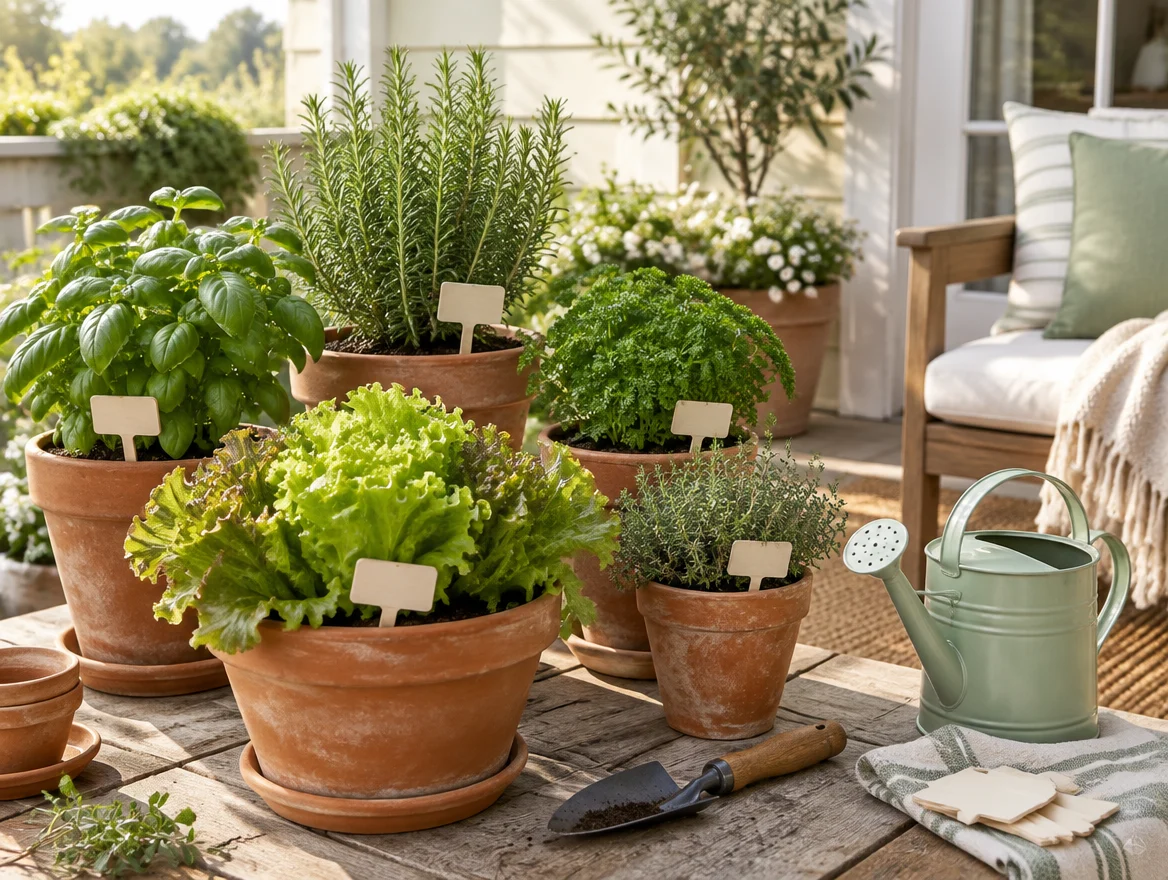
For a kitchen-herb beginning Choose an herb you use often and check its local growing needs. Parsley is a useful cool-season option in Florida; basil prefers warmth. Different herbs have different moisture and light needs, so separate pots make learning easier than one crowded mixed planter.
Start with fewer plants A useful first set might be one herb transplant, one leafy-green container, and one small sowing of radishes. This gives you three different things to observe without making watering a full-time occupation. Skip difficult or space-hungry crops until you know your site.
A buying checklist Look for clear labels, healthy leaves, and a size you can support. Ask about the mature plant, not only the seedling. Check whether it is appropriate around children and pets; do not assume edible to people means safe for a dog to chew.
Grandma: We are choosing plants for our actual sunlight.
Bruisey: I was choosing plants for their dramatic potential.
For Florida, compare your choices with the regional planting calendar. Elsewhere, use your local Extension guidance and frost dates.