
What do you really need in your kitchen?
A small, useful starter kit—not a cupboard full of gadgets you have to negotiate around.
A 10-minute kitchen check
Your cupboards, a notepad, and the recipes you actually want to make.
Start with prep tools
A stable chopping board, a comfortable chef’s knife for trained adult use, a small paring knife, and a vegetable peeler cover many jobs. Add a colander for rinsing and draining. A large knife block is not a requirement.
Measure and mix
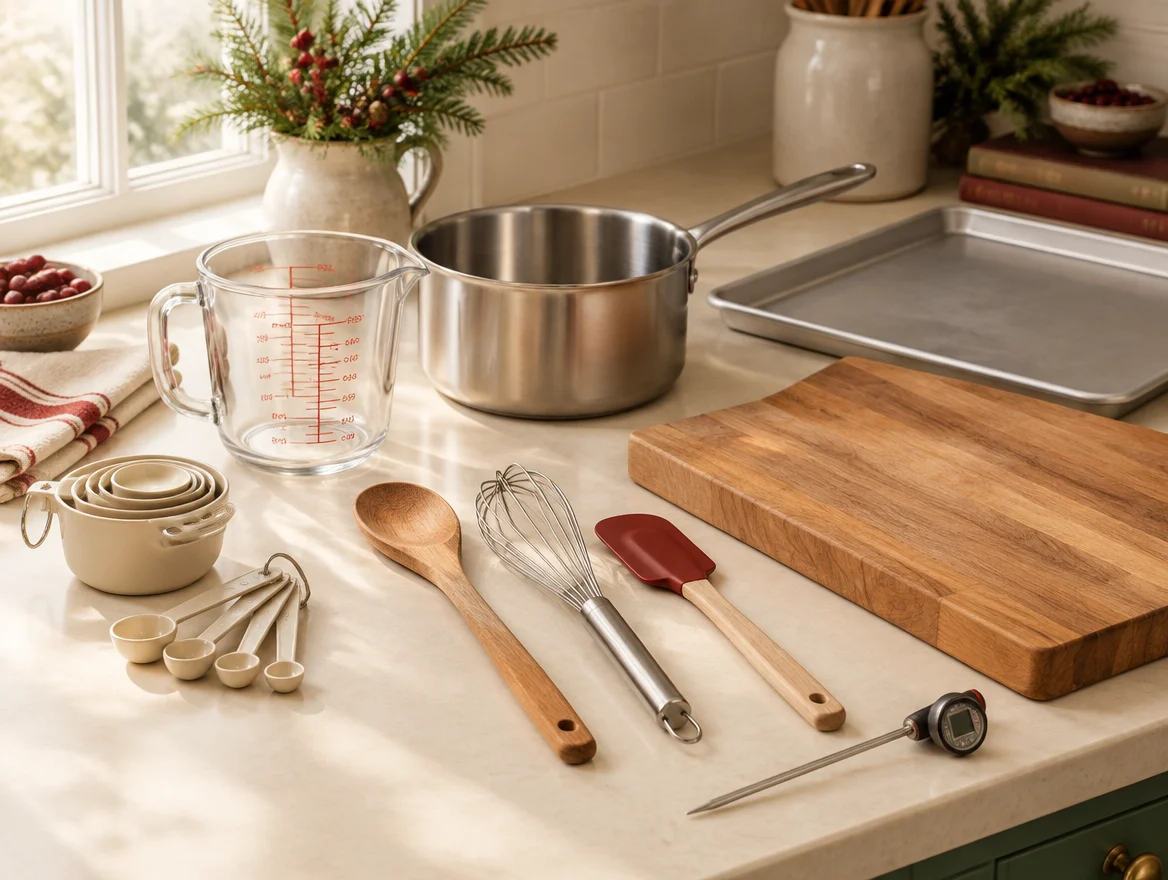
Choose one set of dry measuring cups, one set of measuring spoons, a liquid measuring jug, two mixing bowls, a whisk, and a flexible spatula. A digital scale is a useful addition for baking. Read labels and use the measurement system the recipe specifies.
Cook a few different ways
Start with a medium saucepan with a lid, one good skillet, and a rimmed baking sheet. Add a casserole or baking dish in the size your recipes use. Check oven compatibility and care instructions; glass dishes do not tolerate every sudden temperature change.
Protect hands and check doneness
Keep dry oven mitts, a food thermometer, clean towels, and a timer nearby. An appliance thermometer helps check the refrigerator. Wet mitts and folded tea towels are not substitutes for sound hot-pan protection.
Serve, cool, and store
Have a ladle or serving spoon, a cooling rack for baking, shallow food-storage containers, labels, and a clean place for cooked food. A dish is not finished until it can be served and stored appropriately.
Add pantry basics to match your menu
A modest starting shelf might include oil, salt, pepper, flour, sugar, rice or pasta, and a few seasonings you like. Buy baking powder or yeast only when a recipe needs it and check dates. Stock perishables in amounts you can use; there is no prize for the largest pantry.
Try one little thing.
Choose three recipes and circle only the tools needed for those recipes.
Choose a printable for the adventure →